
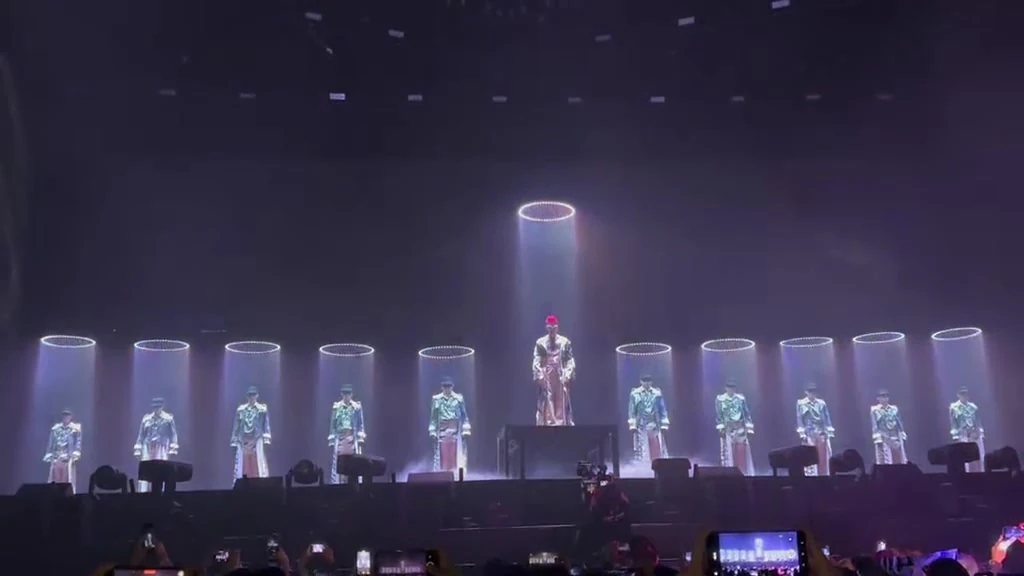
A theater project in Seattle, USA, demonstrates how kinetic LED ring lights can turn the space above a stage into an active part of the performance. In the project footage, illuminated rings frame individual performers, form a line across the stage and then rise into a layered overhead arrangement. The changing positions give the lighting a visible shape as well as a source of illumination.
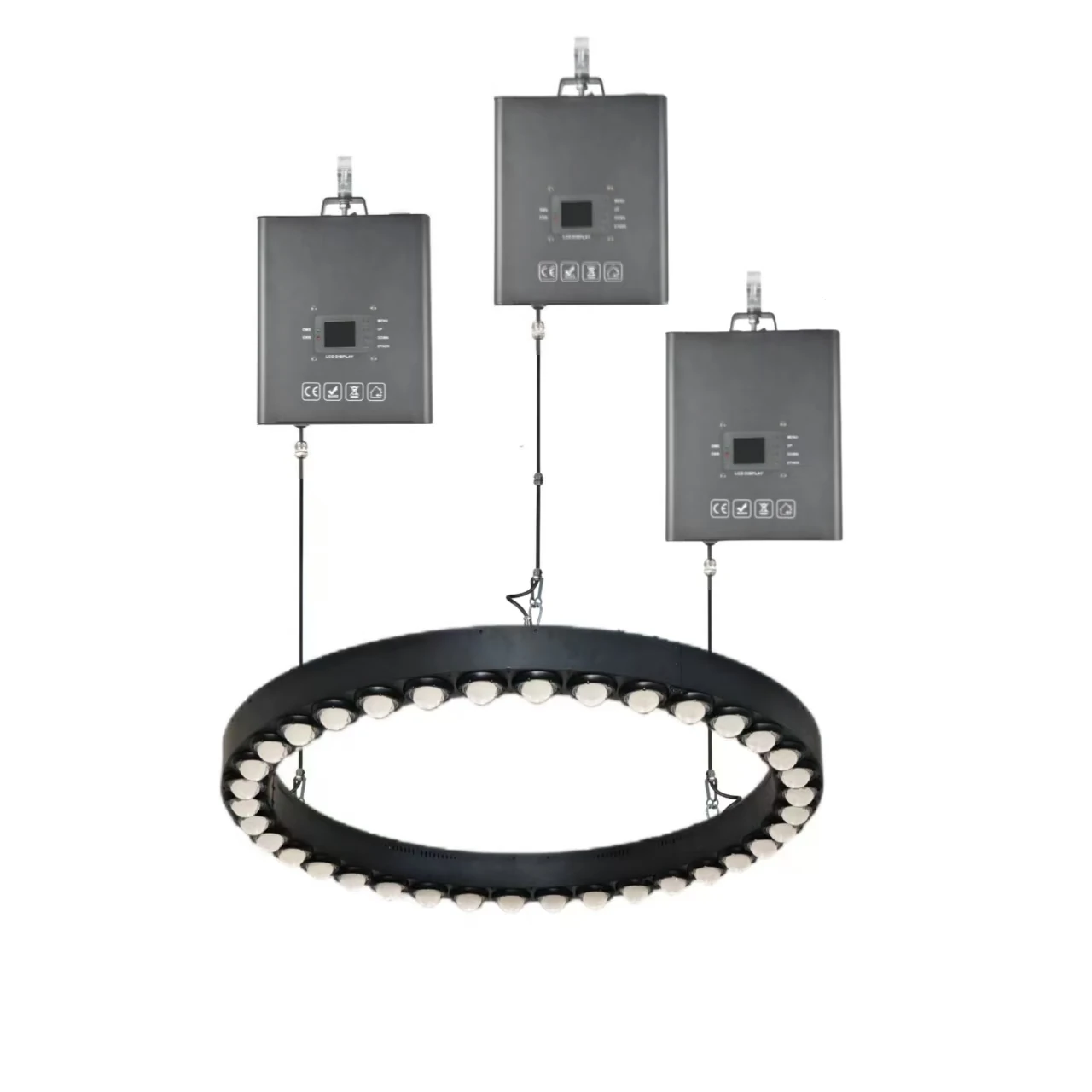
The featured system combines a 1.2-meter LED ring with three lifting units. Each ring is equipped with 36 x 20W 4-in-1 LEDs, with 16CH and 212CH DMX channel modes available. For this theater setting, the circular form becomes a repeating visual element that connects the performers and the wider stage composition.
Project Overview
| Project detail | Description |
|---|---|
| Location | Seattle, USA |
| Application | Theater stage lighting |
| Featured product | 1.2m kinetic LED ring light with three lifting units |
| Project media | 30-second project video and original video stills |
Watch the Seattle Theater Project
Moving Ring Formations Add Depth Above the Stage
The opening sequence places illuminated rings above a line of performers. Downward beams create a series of vertical columns, giving each position a defined space within the wider stage picture. A higher ring above the central performer establishes a focal point while the surrounding rings repeat the circular motif across the scene.
As the sequence develops, the rings appear at different heights and angles. A lower horizontal arrangement changes into a broad curved formation above the stage. This movement makes the overhead space part of the choreography, creating a changing outline that remains readable from the audience's viewpoint.
Visible Halos Across Changing Stage Looks
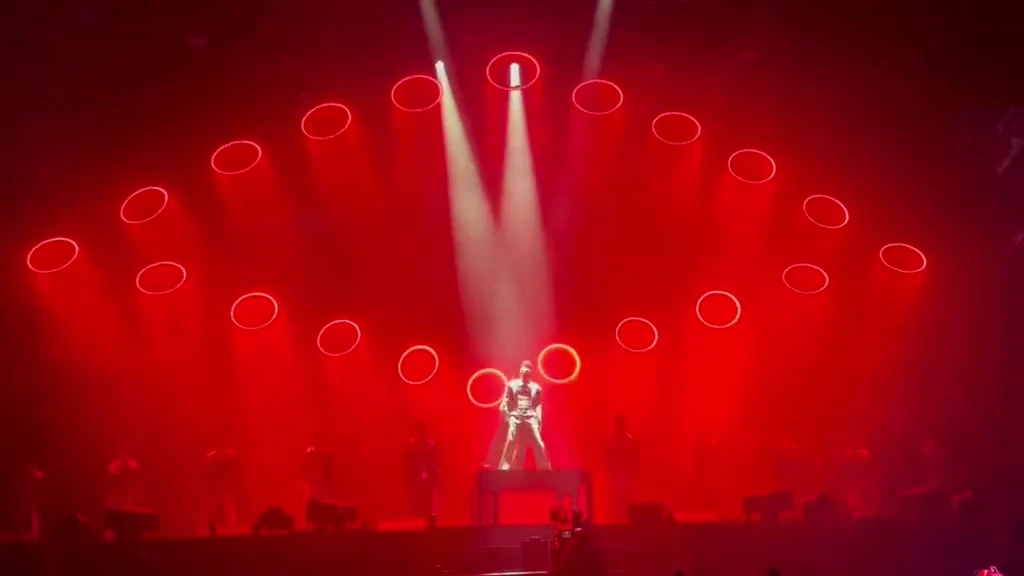
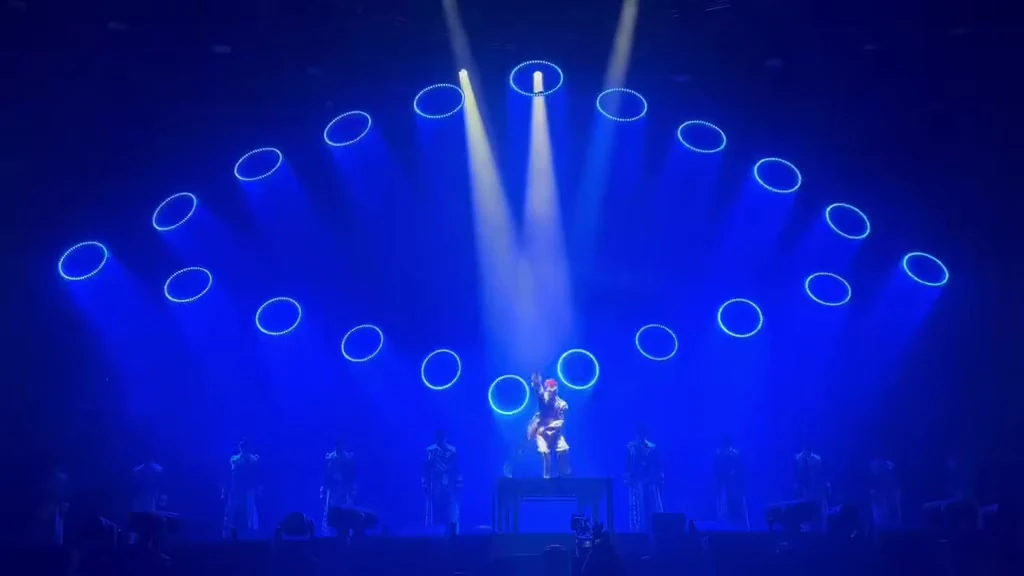
The footage moves through white, red, violet and blue stage looks. The ring outlines remain a recognizable feature while the overall atmosphere changes around them. Visible beams beneath the rings add volume to the scene, and other stage fixtures provide additional beams around the central performer.
This combination is especially clear in the wider views: the rings define an overhead pattern, while the performers remain visible below it. The effect comes from the relationship between fixture position, beam visibility and the rest of the lighting design. The project images show the complete stage look, with the kinetic rings working as one element of that composition.
Project Video Stills
A 1.2m LED Ring with a Three-Unit Lifting System
The product has a 1.2-meter ring diameter and 36 x 20W 4-in-1 LED sources arranged around its perimeter. The circular layout creates the visible halo that defines the fixture, while the lifting units allow the ring to become part of a moving scenic arrangement.
The supplied product set consists of one LED ring and three lifting units. The product reference image shows this configuration. It is separate from the Seattle project footage and is included to explain the fixture's physical form.
DMX Control for Programmed Theater Lighting
The fixture offers 16CH and 212CH DMX modes, together with manual operation and an English-language LCD display. These options provide different channel configurations for a lighting team to evaluate against its console setup and programming requirements. The product also lists a strobe range of 1–25 flashes per second, with a random mode available.
For a theater project, the channel mode, lighting cues and lifting arrangement should be planned together. The Seattle footage illustrates the visual result of changing ring positions within a staged performance; the appropriate control configuration for another installation will depend on its layout and show requirements.
Kinetic LED Ring Light Specifications
| Specification | Details |
|---|---|
| Input voltage | AC 90–240 V |
| Frequency | 50–60 Hz |
| Rated power | 1020 W |
| LED sources | 36 x 20W 4-in-1 LEDs |
| Ring diameter | 1.2 m |
| DMX channel modes | 16CH / 212CH |
| Control | DMX / manual operation |
| Strobe | 1–25 flashes per second, or random |
| Display | LCD with English interface |
| Lifting units — combined net / gross weight | 25.5 kg / 28.5 kg for 3 units |
| LED ring — net / gross weight | 9 kg / 10 kg |
| Complete set — net / gross weight | 34.5 kg / 38.5 kg |
Plan a Kinetic Ring Lighting Project with YL Light
This Seattle theater project shows how a repeated circular fixture can give a performance a distinctive overhead identity. From individual halos above the performers to a wider raised formation, the rings add a moving visual layer that can be read across the stage.
If you are planning kinetic stage lighting for a theater or performance venue, share your stage dimensions, available installation height, required fixture quantity and console information with YL Light. Our team can discuss the ring-light configuration and product details for your application.